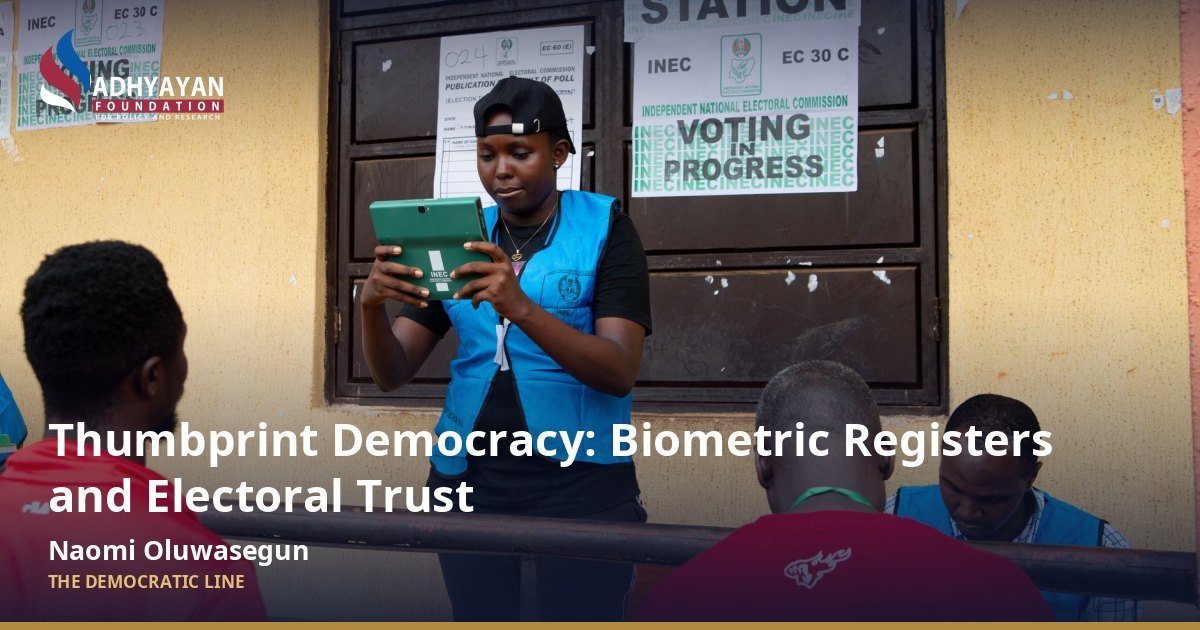

A democracy begins with a deceptively simple question: who is entitled to participate in it? Before a vote is cast, there has to be a reliable answer to who is on the electoral roll. The electoral roll is therefore not merely an administrative list. It determines who the state recognises as part of the electorate and, in practice, who is recognised as eligible to participate in the electoral process. The difficulty is that people move, die, become eligible, change addresses and sometimes appear more than once in official records. The central problem is therefore not simply how to make a voter list “cleaner”, but how a democratic state decides when a person belongs on that list; and who bears the burden when the state gets that decision wrong.
The controversy surrounding Bihar’s Special Intensive Revision (SIR) brought this question into sharp focus. During the proceedings, on 8 September 2025, the Supreme Court directed the Election Commission to accept Aadhaar as an additional document for establishing identity, while clarifying that it was not proof of citizenship (Supreme Court of India, 2026, para. 10.13). Later, on 27 May 2026, the Supreme Court upheld the Election Commission’s power to conduct the exercise under Article 324 of the Constitution read with Section 21(3) of the Representation of the People Act, 1950. The Court held that the exercise had a legitimate purpose, satisfied proportionality and complied with the procedural safeguards of electoral law (Supreme Court of India, 2026, paras. 35–37, 103). According to the Election Commission, nearly 65 lakh electors were not included in the draft roll published on 1 August 2025, compared with 7.89 crore electors before the revision (Election Commission of India, 2025b). During the claims and objections stage, the Commission reported receiving 36,475 claims for inclusion and 2,17,049 objections for exclusion by 1 September 2025 (Election Commission of India, 2025a). The final roll, published on 30 September 2025, contained around 7.42 crore electors, including 21.53 lakh additions and 3.66 lakh deletions (Election Commission of India, 2025b).
The judgment settled the immediate legal question of whether the Election Commission could conduct the SIR. It did not, however, settle the larger institutional question: what should a modern electoral roll system look like in a country where migration, urbanisation and administrative mobility are permanent features of political life? Looking at Germany, Australia, Great Britain and the United States shows that democracies approach this problem differently. Their systems are not perfect, but they reveal an important principle: electoral accuracy is strongest when the state does not merely wait for citizens to prove themselves, but continuously improves its own records while giving citizens meaningful opportunities to correct them.
Germany: When the state carries the first burden
Germany offers a useful contrast because electoral registration is closely connected with municipal population registration. Under Germany’s Federal Registration Act, people are generally required to register their residence with the relevant registration authority (Federal Republic of Germany, 2013, § 17). The voter register is prepared by municipal authorities, rather than requiring every ordinary voter to begin the process from scratch before every election. Before an election, voters receive a notification confirming their inclusion in the electoral register. The Federal Electoral Regulations provide for these notifications to reach eligible voters by the 21st day before polling. There is also a formal period between the 20th and 16th days before the election during which voters can inspect the register and object to incorrect or incomplete entries (Federal Returning Officer, n.d., §§ 19, 21).
The important lesson is not that Germany has eliminated mistakes. It is that the state creates a clear chain of responsibility. The administrative system first identifies the likely electorate, informs the individual of what it has recorded and then gives that individual a defined opportunity to challenge the record. The citizen is not expected to remain permanently responsible for proving that the state has recorded them correctly.
This matters especially in a country like India. Internal migration is extensive, and people frequently move between villages, towns and cities for education, employment or family reasons. A system that treats movement primarily as a reason for suspicion risks confusing mobility with ineligibility. The better approach is to treat movement as an ordinary administrative event that electoral institutions must be capable of tracking.
India already possesses parts of the infrastructure required for such an approach. Civil registration, population records and other government databases can provide information about births and deaths. The Registration of Births and Deaths (Amendment) Act, 2023 provides for the use of a national and state-level database of registered births and deaths, creating possibilities for stronger administrative coordination (Government of India, 2023). The political question is therefore not whether India has enough data, but how such data can be used without turning electoral registration into an opaque exercise in automated exclusion.
Australia: Data can identify a problem without deciding the outcome
Australia provides another model. The Australian Electoral Commission (AEC) maintains the electoral roll using information from different government sources and through direct enrolment and update processes. The objective is not merely to remove names that appear questionable but to keep the roll continuously updated. As of 30 September 2026, the AEC reported a national enrolment rate of 97.8 percent of its estimated eligible population (Australian Electoral Commission, 2026).
The significance of this figure lies less in the number itself than in the administrative philosophy behind it. A large electoral roll cannot be maintained accurately if the election authority only becomes active immediately before an election. The state has to identify changes throughout the electoral cycle.
At the same time, the Australian experience demonstrates why data matching cannot be treated as a final decision. A database can show that a person may have changed address, died, or appeared in another record. It does not automatically establish that the electoral roll is wrong. The administrative system therefore has to distinguish between a data signal and a legal finding.
This distinction is particularly important for India. If a database indicates that a person has moved, the appropriate conclusion is not necessarily that the person should disappear from the electoral roll. It may mean that the person should be contacted, asked to update their details or transferred to another constituency. Similarly, a possible duplicate should trigger verification rather than immediate deletion. In electoral administration, the cost of a false negative, wrongly excluding an eligible voter, can be much greater than the inconvenience of temporarily investigating a questionable entry.
The broader lesson is that technology should reduce the burden on citizens, not simply increase the state’s capacity to remove names. Data integration is valuable when it allows election authorities to find people who may have been missed and correct records before an election. It becomes problematic when a database flag is treated as conclusive evidence of ineligibility.
Great Britain: The problem of completeness does not disappear with individual registration
Great Britain provides perhaps the clearest warning against assuming that a registration system becomes accurate simply because individuals have a formal responsibility to register. Since the introduction of Individual Electoral Registration, eligible citizens have generally been required to register themselves. Electoral Registration Officers also use information and data matching to maintain the registers.
Yet the system continues to experience significant gaps. The Electoral Commission’s 2023 report, based on its study of the December 2022 local government registers, found that electoral roll completeness in Great Britain was approximately 86 percent, while accuracy stood at 88 percent. These figures do not cover the entire United Kingdom. Northern Ireland was assessed separately, with completeness at 83 percent and accuracy at 86 percent. The report also found significant differences across residential groups. Private renters in Great Britain had a completeness rate of just 65 percent, compared with 95 percent among owner-occupiers (Electoral Commission, 2023).
This is an important political point. A system can be formally neutral while producing unequal outcomes. If registration depends heavily on individuals responding to official correspondence, people who move frequently, rent privately or have weaker connections to administrative institutions are more likely to be missed. The problem is not necessarily deliberate discrimination. It is the effect of placing the same administrative burden on citizens who do not have the same relationship with the state.
Great Britain’s experience therefore suggests that individual responsibility and state responsibility should not be treated as opposites. Citizens should have the ability to register and correct their information, but public authorities should also use reliable data to identify people who may have been left out. The Electoral Commission itself has recommended greater use of public-sector data to facilitate registration (Electoral Commission, 2023).
The lesson for India is particularly relevant. A democratic electoral roll should not depend entirely on the ability of an individual to navigate administrative procedures. The state has far greater access to information about its population than any individual citizen has access to the state’s databases. That asymmetry creates a corresponding responsibility for the state to use its information carefully and transparently.
The United States: Removing a name is not the same as finding an error
The United States demonstrates the opposite institutional problem. Unlike India, it does not have one nationally administered electoral registration system. Registration is largely organised by states and local authorities, producing considerable variation across jurisdictions. The National Voter Registration Act and subsequent federal legislation establish certain common requirements, including protections concerning the removal of voters from registration lists.
One of the most important protections concerns the timing of removals. Federal law requires systematic programmes for removing voters on the basis of list-maintenance criteria to be completed at least 90 days before a federal election, subject to specified exceptions (52 U.S.C. § 20507(c)(2)(A)). The broader principle is that list maintenance cannot be allowed to become a last-minute mechanism for excluding voters. Administrative uncertainty must be resolved through procedures rather than through hurried deletion.
The American experience also demonstrates why matching records is not enough. Government records can contain different spellings, outdated addresses and other inconsistencies. A match based only on limited identifying information can produce false positives. The United States Department of Justice has therefore emphasised that list-maintenance procedures must comply with federal protections and should not rely on unreliable matching criteria alone (U.S. Department of Justice, 2026). Judicial decisions, including Husted v. A. Philip Randolph Institute (2018), have also shaped the legal boundaries of voter-list maintenance. In that case, the Supreme Court upheld Ohio’s procedure of using a failure to return a notice, followed by continued non-voting, as evidence of a possible change of residence under the NVRA (Husted v. A. Philip Randolph Institute, 584 U.S. 756 (2018), slip op. at 8–9, 16–19).
The important lesson for India is the distinction between identifying a potentially inaccurate entry and establishing that a person is no longer entitled to remain on the roll. The first is an administrative function. The second can directly affect political participation and therefore requires greater procedural protection.
This is where the question of burden becomes central. If the state suspects that an elector has moved, should the individual have to prove that they still belong on the roll, or should the state first establish sufficient grounds for removal? Different democracies answer this differently, but the comparison suggests that deletion should require more than an uncertain database match.
What India can learn
These examples do not offer India a ready-made model. Germany’s population registration system cannot simply be transplanted into India, whose federal structure, population size and patterns of mobility are very different. Australia’s high enrolment rate is supported by institutional arrangements that India does not possess in identical form. Great Britain continues to struggle with incomplete registration despite sophisticated data systems. The United States shows the challenges of fragmented administration and politically sensitive list maintenance.
The useful lesson is therefore not to copy institutions but to identify principles.
First, electoral rolls should be treated as living administrative records, not documents that are periodically reconstructed from scratch. Intensive revisions may be legally permissible and sometimes necessary, but a system that depends too heavily on extraordinary exercises is likely to place a disproportionate burden on citizens. Continuous updating can reduce the need for large-scale corrections before elections.
Second, the state should use its own information to find citizens who may have been missed, rather than relying only on citizens to approach the state. Data from birth and death registration, residence-related records and other government systems can help identify changes. But data should be used to initiate verification, not to replace it.
Third, electoral authorities should clearly distinguish between a flag, a notice and a finding. A database match is a flag. A notice gives the individual an opportunity to respond. Only after the relevant procedure should a final administrative finding be made. This distinction protects both the accuracy of the roll and the legitimacy of the institution maintaining it.
Fourth, notification must become a central part of electoral administration. Germany’s model is instructive because the citizen is told what the state believes the electoral record says before the election. A comparable principle in India would mean that if an elector is proposed for deletion or transfer, the state should make reasonable efforts to inform them and provide an accessible route for correction.
Finally, reforms should be evaluated not only by how many names they remove but by how accurately they balance completeness and accuracy. A roll containing duplicate or ineligible entries is a problem. A roll that excludes eligible citizens is also a problem. The objective of electoral administration is therefore not maximum deletion. It is maximum reliability.
The Case for Intensive Revision
There is also a strong argument in favour of the Election Commission’s approach. India’s electoral rolls face challenges arising from large-scale migration, deaths, changes in residence and duplicate entries. Routine updating may not always be sufficient to identify these problems, making intensive revision necessary to verify existing records and maintain electoral accuracy. From this perspective, the exercise is not necessarily about excluding voters but about ensuring that the electoral roll reflects the actual eligible electorate.
However, Germany’s model cannot be directly applied to India. Its registration system relies on compulsory residence registration and regularly updated municipal records. India does not have an identical nationwide system, and its population size, internal migration and uneven administrative records create different challenges. The Election Commission’s argument for active verification is therefore valid to an extent.
Yet, these limitations do not mean that the entire burden of verification should fall on citizens. Identifying a possible duplicate or change of address should lead to further verification, not automatic deletion. Intensive revisions may be necessary, but they must be accompanied by proper notification, reasonable opportunities to respond and accessible procedures for appeal. India’s administrative challenges may justify the need for revision, but they cannot justify weakening the safeguards available to eligible voters.
An electoral roll is more than a list
The Bihar SIR has demonstrated why electoral rolls sit at the intersection of constitutional law, administration and political participation. The Supreme Court has upheld the Election Commission’s authority to undertake the exercise and recognised the legitimate objective of maintaining accurate electoral rolls (Supreme Court of India, 2026, paras. 35–37, 103). That legal authority, however, does not answer every question about how electoral registration should be designed in the long term.
The comparative experience suggests that the most durable electoral systems do not place the entire burden of accuracy on either the citizen or the state. They combine state capacity with individual safeguards. The state uses the information available to it to maintain the roll; the citizen is given meaningful opportunities to inspect, correct and challenge the record; and removal is treated as a decision requiring justification rather than as a simple administrative deletion.
This is ultimately a question of democratic design. An electoral roll is not merely a list of people who have successfully navigated the bureaucracy. It is the state’s institutional statement of who constitutes the electorate. When that statement is wrong, the consequences are political, not merely administrative.
India therefore does not need to choose between a completely state-driven and completely citizen-driven registration system. The better direction is a system in which the state assumes greater responsibility for maintaining accurate records while preserving strong procedural protections for citizens. The objective should be a roll that is continuously updated, publicly accountable and difficult to manipulate — but also difficult for the state itself to get wrong without giving the affected citizen a meaningful chance to respond.
The central question is thus not whether India should have a cleaner electoral roll. It is who bears the burden of proving that a name belongs on that roll, and what happens when the state gets that judgment wrong. The future of electoral administration in India will depend on answering that question not only efficiently, but constitutionally.
Frequently asked questions
What did the Supreme Court decide on Bihar’s SIR?
On 27 May 2026 it upheld the Election Commission’s power to conduct the exercise under Article 324 read with Section 21(3) of the Representation of the People Act, 1950. It held that the exercise had a legitimate purpose, satisfied proportionality and complied with procedural safeguards.
How does Germany keep its voter register?
The register is prepared by municipal authorities from residence registration. Voters are notified of their inclusion and can inspect the register and object between the 20th and 16th days before the election.
Why is data matching not enough to delete a name?
A database match is only a flag. The article argues that a possible duplicate or change of address should lead to a notice and verification, with removal only after a proper procedure.
What principles does the article draw for India?
Treat rolls as living records, use state data to find missed citizens, distinguish a flag from a notice and a finding, and notify electors before deletion. Reforms should be judged on both completeness and accuracy.
Further reading from AFPR: How Other Republics Keep Their Books: Voter Registers Abroad · Verdict on the Voter List: What the Court Really Said
References
Australian Electoral Commission. (2026). Size of the electoral roll and enrolment rate 2026.
Electoral Commission. (2023). 2023 report: Electoral registers in the UK.
Election Commission of India. (2025a, September 1). Bihar SIR 2025: Daily bulletin. Press Information Bureau.
Election Commission of India. (2025b, September 30). Press Note No. ECI/PN/313/2025: Final publication of electoral rolls in Bihar following Special Intensive Revision.
Federal Republic of Germany. (2013). Federal Registration Act (Bundesmeldegesetz), § 17.
Federal Returning Officer. (n.d.). Federal Electoral Regulations (Bundeswahlordnung), §§ 19, 21.
Government of India. (1950). Representation of the People Act, 1950.
Government of India. (2023). Registration of Births and Deaths (Amendment) Act, 2023.
National Voter Registration Act of 1993, 52 U.S.C. § 20507.
Supreme Court of India. (2026, May 27). Association for Democratic Reforms v. Election Commission of India, 2026 INSC 564, W.P. (C) No. 640 of 2025.
U.S. Department of Justice. (2026). National Voter Registration Act: List maintenance.
Husted v. A. Philip Randolph Institute, 584 U.S. 756 (2018).