Blog

Your blog category

Bangladesh political unrest before elections- What lies ahead for India?

Shivesh Kaushik Abstract Bangladesh is the only nation India entered in a war with, a hostile power. Post 1971 India assisted Bangladesh in government formation, civil services training and bureaucracy standardisation. Post 1971 the newly born nation suffered economic stagnation as well as political stability. 8-9 Million refugees were accommodated into the Indian territory. Be […]

Bangladesh political unrest before elections- What lies ahead for India? Read More »

The Widespread Use of Freebies: Implications for Welfare, Governance, and Fiscal Sustainability in India

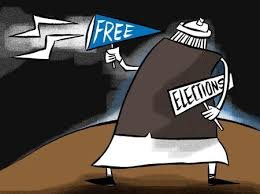
Eman Syed The widespread use of freebies also known as “revdi culture” in the name of welfare has blurred the lines between state responsibility and vote-bank politics. Though popular among voters, such schemes often mask underlying fiscal stress and undermine long-term development, ultimately burdening the very citizens they claim to benefit. This article aims to

The Widespread Use of Freebies: Implications for Welfare, Governance, and Fiscal Sustainability in India Read More »

Mapping the Depths: An Inquiry into India’s Groundwater Insecurity

Siddhartha  Water shapes our settlement patterns, agricultural systems, and cultural practices. As a critical resource for human survival and a fundamental element for planetary balance, it is facing multiple challenges. Although water covers approximately 71% of the Earth’s surface, only about 2.5% constitutes freshwater (USGS, 2019). Out of which only a minor fraction is within

Mapping the Depths: An Inquiry into India’s Groundwater Insecurity Read More »

FROM REJECTION TO REFINEMENT: COURTS’ SHIFTING APPROACH UNDER ARBITRATION LAW.

Anjali Yadav There is an intricate change in India’s arbitration landscape, as it looks to find the right balance between the expedience of alternative dispute resolution and the necessity of some judicial oversight. The Arbitration and Conciliation Act, 1996, was enacted in part to decrease and limit instances of judicial intervention and enhance party autonomy.

FROM REJECTION TO REFINEMENT: COURTS’ SHIFTING APPROACH UNDER ARBITRATION LAW. Read More »

Balancing Innovation and Rights: Regulating AI Algorithms in Democracies

Pallepati Sai Abhijeet Rao The field of artificial intelligence has seen incredible expansion in the past decade, drawing on a rich legacy of previous research and development. A lot of this expansion can be attributed to improvements in computing capacity and availability of large datasets. One of the most important applications of AI is large

Balancing Innovation and Rights: Regulating AI Algorithms in Democracies Read More »

Gender Neutrality VS Gender Justice: Rethinking Equality in Law

Gaikhangduanliu M. Kamei The Illusion of Neutrality in Legal Equality In a constitutional democracy like India, the law is often regarded as the ultimate arbiter of equality and justice. Yet, the very fabric of legal frameworks can sometimes reflect and reproduce the biases they seek to dismantle. One such tension emerges in the debate between

Gender Neutrality VS Gender Justice: Rethinking Equality in Law Read More »

The Implementation Trap: How Weak Local Capacity Undermines Policy Success

Prachi Gupta The Missing Link: Why Policies Fail Without Local Strength Good governance is generally characterised by transparency, accountability, efficiency, and responsiveness. Governments and international organisations invest substantial resources in designing policies intended to address societal challenges, from poverty alleviation and Healthcare access to Environmental protection and infrastructure development. However, the journey from policy conceptualisation

The Implementation Trap: How Weak Local Capacity Undermines Policy Success Read More »

The Battery-Mineral Anomaly: Global Competition Crisis for Critical Resources and Domestic Extraction Challenges in the Electric Vehicle Revolution

Kunal Powde The Reserve ParadoxElectric Vehicles have changed how the world drives in the past few years. As the planet transitions towards a new green age of alternatives, sales of electric cars exploded to more than 17 million globally in 2024, accounting for more than 20% of sales [1], and are estimated to exceed 40%

The Battery-Mineral Anomaly: Global Competition Crisis for Critical Resources and Domestic Extraction Challenges in the Electric Vehicle Revolution Read More »

Climate Finance and Green Investment in India: Bridging the Gap Between Ambition and Action

Dishita Singh India’s climate commitments ranging from 500 GW of non-fossil energy by 2030 to net-zero emissions by 2070 signal high ambition under the Paris Agreement. Yet, despite policy intent, the green transition remains severely constrained by the lack of accessible and accountable finance. This article goes beyond surface-level reporting to analyze the deeper structural,

Climate Finance and Green Investment in India: Bridging the Gap Between Ambition and Action Read More »

Algorithmic Alliances: Could AI Replace Diplomats in Mini-lateral Decision Making?

Indrani Mahesh Jadhav In an era where traditional multilateral institutions are increasingly paralyzed by bureaucracy, competing interests, and geopolitical polarization, mini-lateralism has emerged as a preferred diplomatic strategy. These smaller, more agile coalitions allow like-minded states to coordinate rapidly on current global issues. But what if the next evolutionary leap in diplomacy isn’t just smaller,

Algorithmic Alliances: Could AI Replace Diplomats in Mini-lateral Decision Making? Read More »